Culture
Of course there are materially privileged country, but, when we have to come to the subject of culture, things may change. Of course that Italian, Russian or South-American cultures are all important, because every country brings its contribution to the “great culture of the world”.
We have not Rembrandt, but Grigorescu, the greatest painter of the Romanians, become a national symbol, through his “Cart with oxen”. An Enlightenment representative personality, the painter started his artistic activity by painting icons and frescos(for example, Agape Monastery is painted inside by Grigorescu) and then he turned to laic subjects. In fact, if we speak about Romanian painting, we must say that, for centuries, it was limited to the iconography. No magnificent palaces were built here, but churches appeared, as signs of eternal gratitude towards God, after a great victory in front of an enemy; and they had to be painted.
If your steps take you through the forests of Romania, surely that you will here the sound of the ancient trees or the song of the skylark which will remind you Enescu’s music, the famous Romanian Rhapsody. An artist of the Pan’s pipe, well known all over the world, Gheorghe Zamfir, “speaks”, throughout his music, about a very Romanian, “intraductible” feeling: the “dor” of this people that, being connected to sorrow and passing to the joy of seeing a sun coming back home, defines our soul. And aren’t few who are delighted by our famous “ The Skylark”, an instrumental melody magnificently played by some true masters of the violin, who prove our talent and sensibility all over the world.
That is why there is no party in our country without the people to sing and listen to our traditional and special Folk music. Even though it has a simple theme and an uncomplicated text, it makes the Romanian soul vibrate. He likes Classical music, too, but he cannot find in it any remedy for the wounds of his heart; when he is sad and alone, there is nothing better for him than this sweet, calm and peaceful music, sound and poetry which define the Romanian heart.
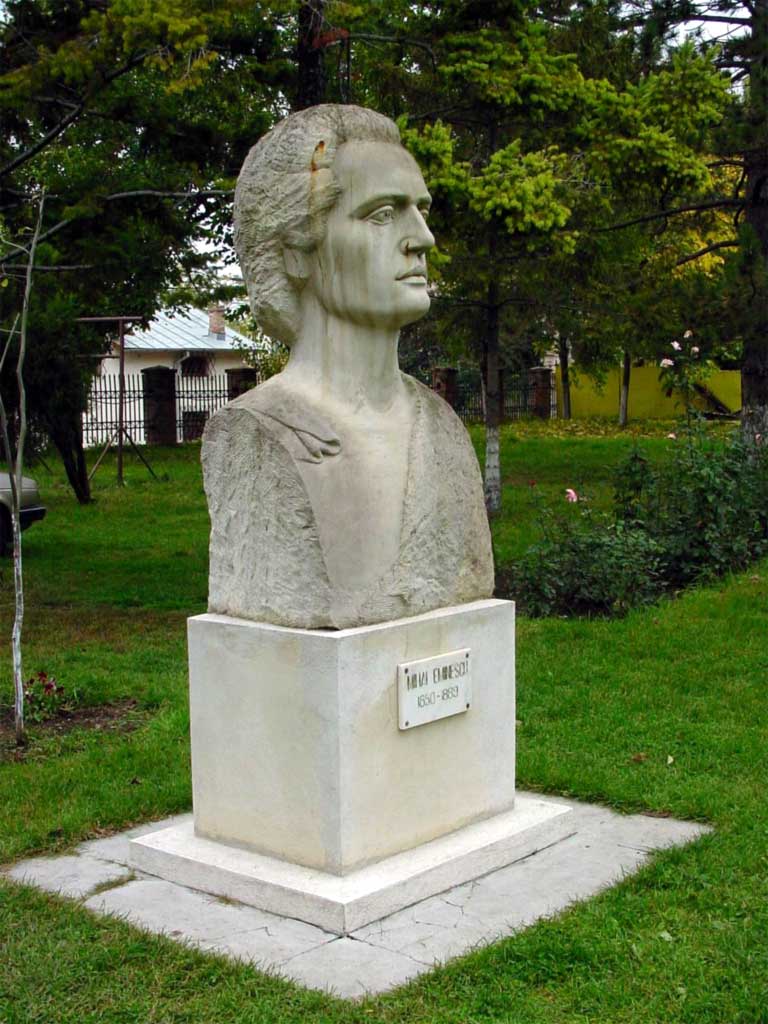
Also our literature has a fundamental symbol: Mihai Eminescu- a genius who has gone too early to a peaceful world, without the sorrows and deceptions he had all his life. His literary work is very hard to translate, because he dreams, writes, loves and lives only in his own universe; his whole soul is true Romanian poetry. His literary work is more than poetry and prose: it becomes metaphor, symbol and philosophy.
Because, in our sincerity, we had to be able to handle the great trials of life, we learned to love acting. On the biggest stages of the world, were played and are still playing Eugene Ionesco’s plays. We are talking about the same Romanian whom his destiny brought to Paris, where he became famous and a true symbol for what we call “universal culture”. By showing to the foreigners the real meaning of Romania, he succeeded to be accepted and got to mean something special for the humanity. The same thing happened to Mircea Eliade, an intuitive philosoph and a talented religion historian. He had the merit to create this domain and bring it to America. By writing “The history of religions”.
And if we think of sculpture, the name of Constantin Brâncuşi is a national symbol. He need not speak, because his work does it for him: The Column of the Infinite, The Table of Silence and The Gate of the Kiss or Miss Pogany. Rodin’s people, this Romanian “character” left his home without shoes in his feet and ended by amazing the West by his talent and spirit, being a true pioneer in defining the spirit of modernity and post modernity. He made the stone sing and cry, yearn and fly, using his Romanian heritage.
But let’s come out of the books for a moment and have a close look to the streets of Romania. Here, too, the eye is impressed by the different architectural styles, from the Baroque and Renaissance to Art Nouveau, Rococo and brâncovenesc, an entire history written in stone.
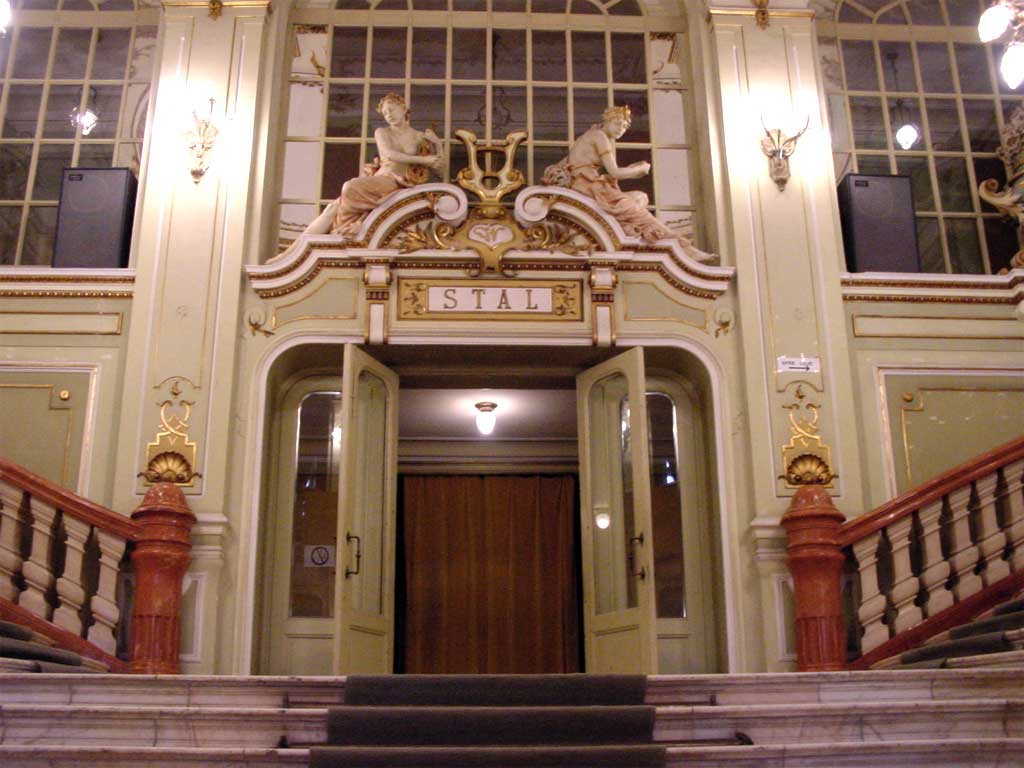
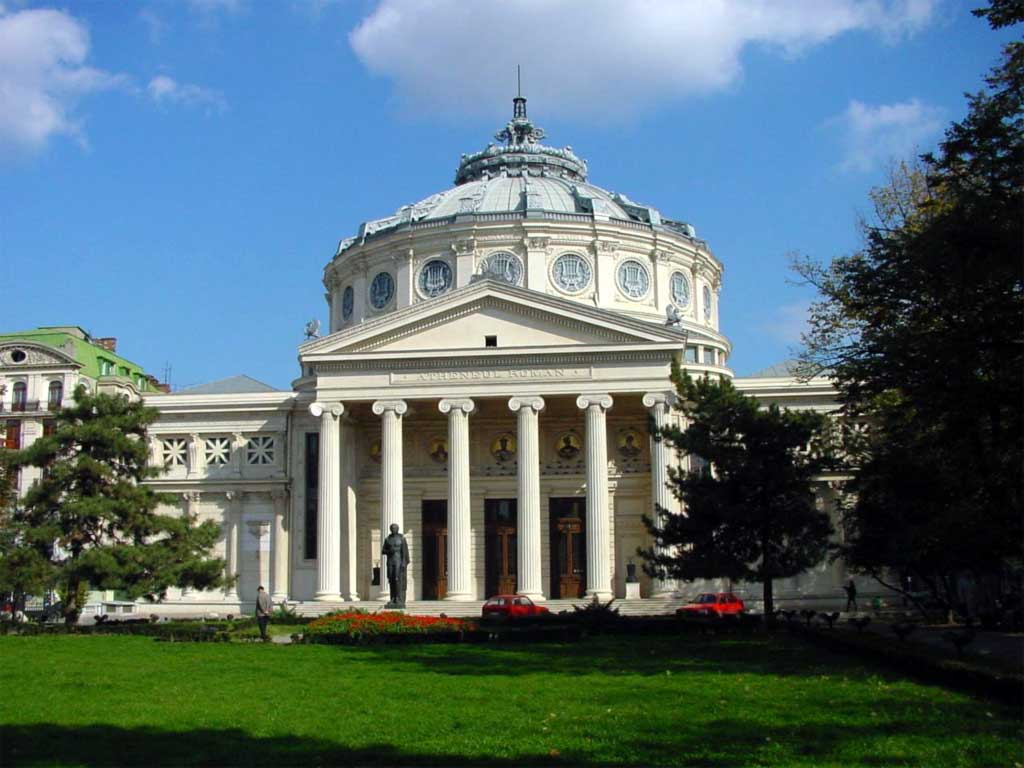
The famous Romanian “Ateneu”, built by public contribution in 1888, hosted some brilliant and unique artistic events; so, on the stage of Ateneu, or on the famous stages of Scala and Metropolitan, personalities like Mariana Nicolesco, Angela Gheorghiu, Neli Miricioiu or Nicolae Herlea proved the fact that this people is an inexhaustible source of talents.
No matter how many things we would try to say about the culture of Romania, you won’t ever know it as well as if you come here and see it for yourself! |


|