Braşov
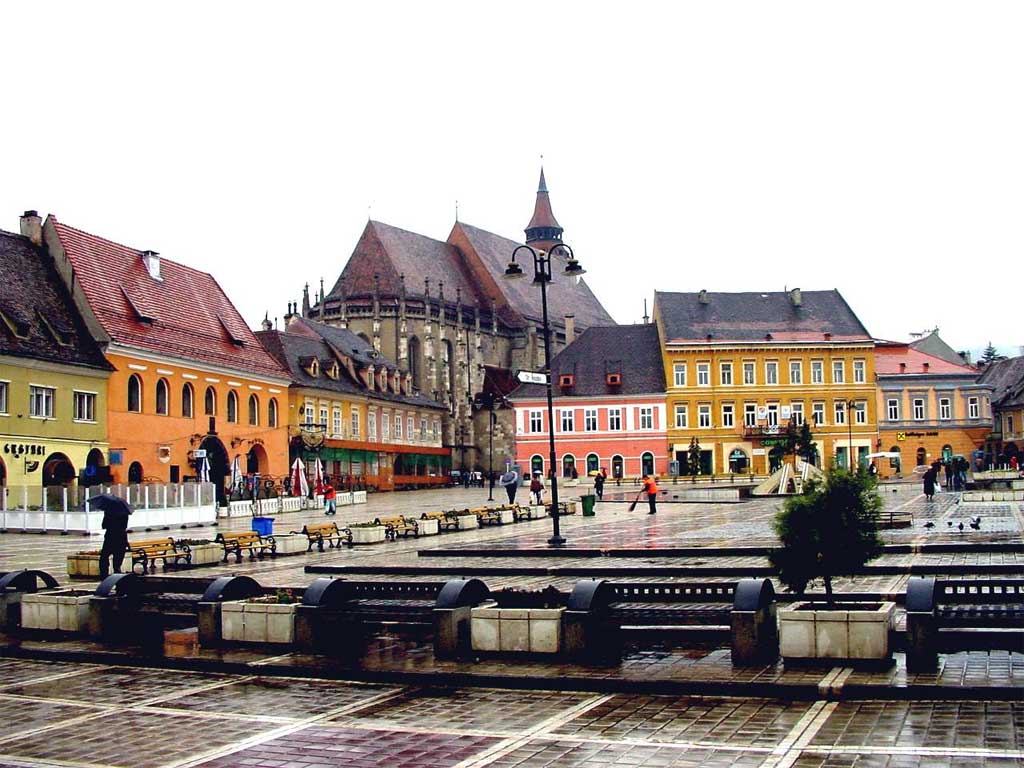
The town from the lap of the Tampa Mountain, better known as Braşov or Kronstadt, the later being the German name, is a place that is full of history, one of the seven citadels created by this population in Transilvania. It attracts the tourists both through its old buildings - that seem almost stuck one to another, as a proof of the German influence- and through the spectacular place where it is located. At a distance of only 12 - km from Braşov, is the famous station called Poiana Braşov, one of the most wanted places by the fans of skiing.
Being always a fundamental element in the economy of Romania, it was called, not by accident - “the city of Stalin”. Fortunately, that epoch is long gone now, but it made place for some other strange times, full of social and political worries and problems. The revolt of the workers, in 1987, but also the victims who died during the Revolution of December 1989, made Braşov a true “Martyr City”.
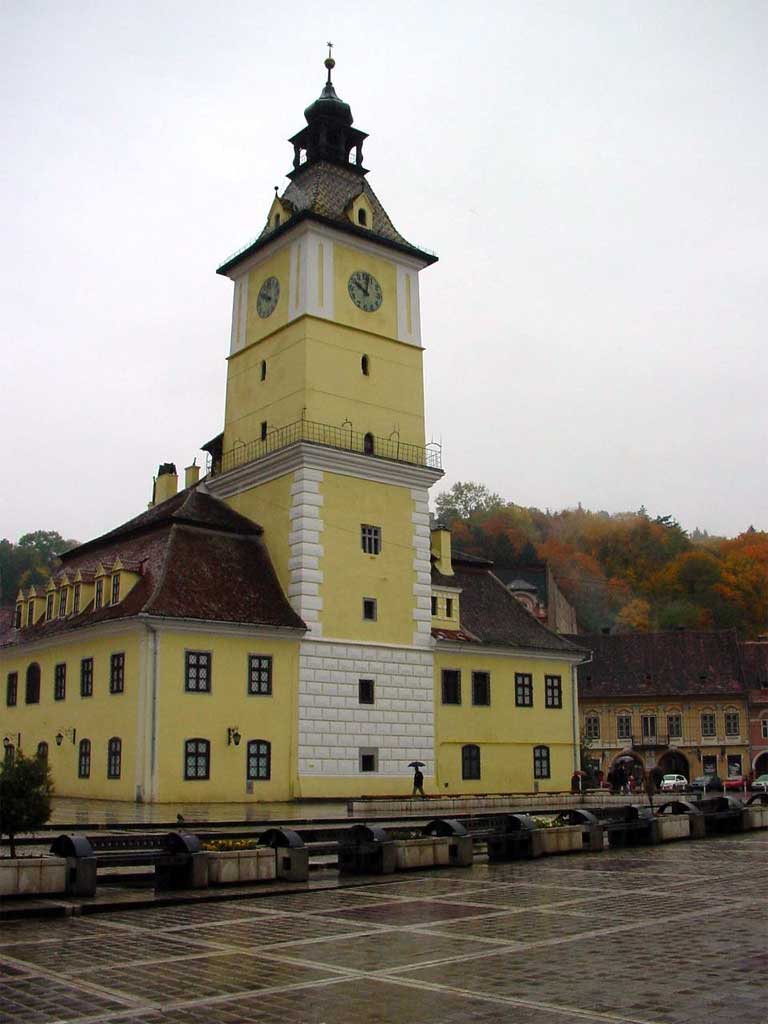
Everyone who arrives in Braşov, at almost 170-km distance from Bucharest, can feel the special air that is present everywhere. The “Counsel Square” is the place where, every summer, the Romanians organize an International Music Festival, called “The Golden Stag”. Also, here is the place where, every year, for the holiday of Saint George, takes place a special event called “The Youngsters of Braşov”. In the former Counsel House there is now History and Archeology Museum. Other important buildings, as Muresanu House, the Hirscher House, the Citadel or Saint Nicolae Church, they all speak of the common history that Romanian and German population shared in Transilvania.
But, of course that the biggest historical and architectural monument is the famous Black Church, that is not missing from any of the tourist guides of Romania. The biggest building created in the Gothic style in our country, The Black Church takes a great pride in its huge organ- one of the biggest in Romania- as well as in its impressive collection containing carpets from Anatolia.
The statue of Johannes Honterus, the Iluminist personality, is here to remind everybody over the centuries of the typographic activity from the city of Braşov during the 16th century. For the Romanians who lived here, the museum of the first school in Transilvania, just near Saint Nicolae Church, takes a special importance. Here is where Coressi printed, in the 16th century, the first book written in Romanian.
In the neighborhood, we can see what most tourists are very impatient to see: the Bran Castle. Built in 1377, it was a royal residence in 1920-1930, but today it is history and medieval art museum, which succeeds to keep its magical air unchanged, besides the time that passed. It is a living ethnographical museum, too, because there are different shows organized here, in the most authentic Romanian way.
But, the real reason why the castle is never forgotten is connected to its relation to a “mythical and historical past”. So, it remains an attraction for so many tourists especially for it once belonged to Vlad Ţepeş, whom, because of his special sense of making justice and especially because of his punishments, was called “Vlad-the Devil” or “The Dragon”. Even though this shouldn’t have been a reason for exaggerated reaction, because, at first, the name had no ethical connotation; it was more related to a special symbol, some sort of a blazon, that was also a part of the Romanian Country stemma. After his death, out of a need for sensational explanations in some hard, dim times, the people have mistaken their “Prince Vlad” for some bad creature. More than that, they permitted the foreigners to make the same mistake and to see in the former prince some legendary vampire, called Dracula. In fact, the only connections we ca establish are the name-with a vague resemblance - and the aristocratic origin.
If we know where and how to look, we can find Prejmer, known as a village since 1240, with the most powerful peasant in Transilvania (15th-16th centuries), around an Evangelical Church (1250).
To answer to some of your possible need for romanticism, you can visit Herman, that is both a peasant fortress and a Romantic church (15th-16th centuries). |


|