Bucharest
Of course, every person who is visiting a foreign country is first interested in knowing the Capital of that country. Bucharest, a city with over 2 millions of inhabitants, a former capital of the United Principalities (1859), becomes, starting from 1918, at the realization of the Great Union, also the Capital of the True and Big Romania. Before The Second World War, Bucharest was known as “Little Paris’, because of its many similitudes with the big European Capital, mostly because of the architectural style and the refinement of the atmosphere. Maybe few people know the fact that Bucharest was the first city in the world that has used the kerosene for the public lighting, in 1857.
The first evidence about the city itself was given in 1459, when Vlad Ţepeş was reigning in The Romanian Country. The city gets its name from a shepherd called Bucur who, as the legend tells us, reachead these regions, together with his sheeps.
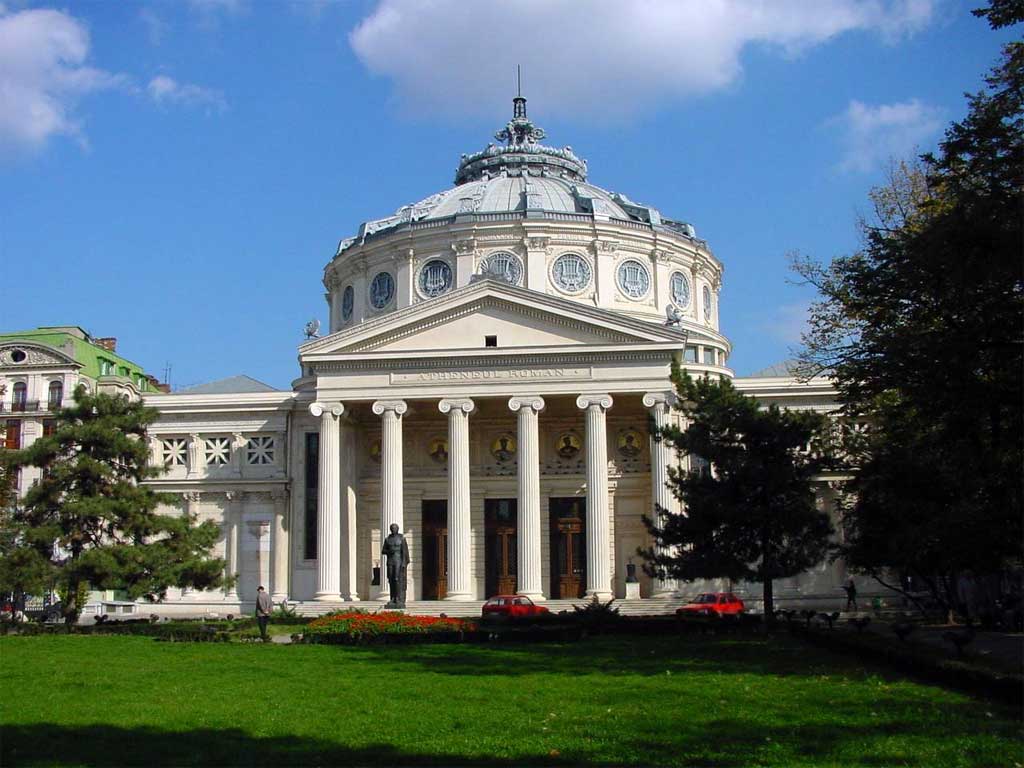
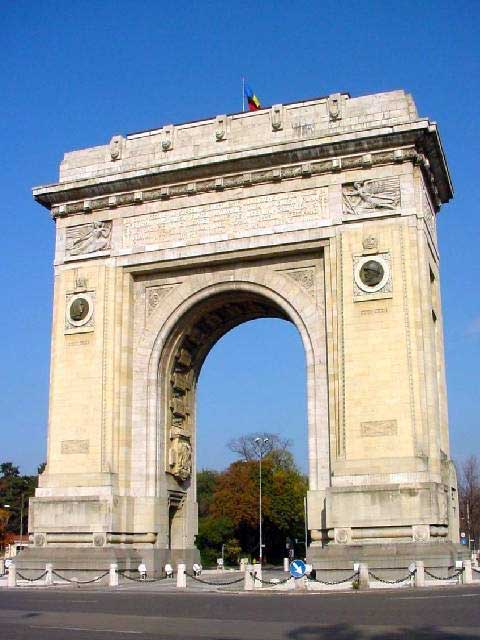
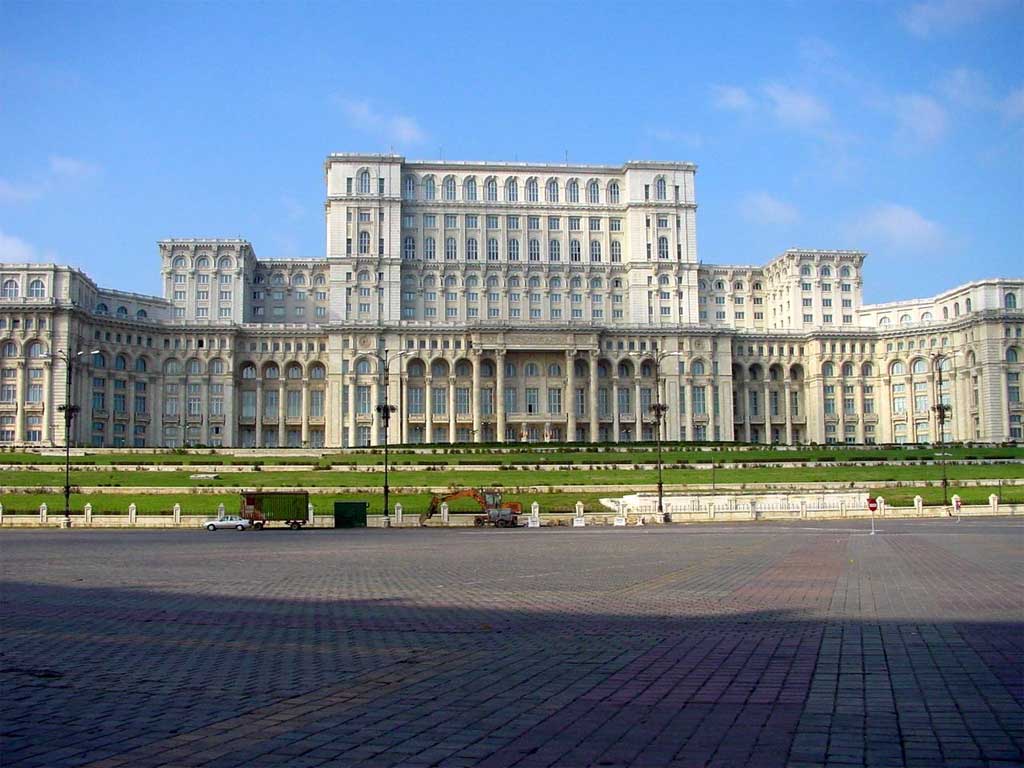
A nice politic, administrative, economic and cultural center, Bucharest is a fascinating city, full of paradoxical elements. You can see some huge constructions, built out of a megalomaniac instinct, as the actual House of Parliament - the second in the world, as its surface, following the Pentagon. But there are some true architectural values (The Romanian Atheneum, The Triumph Arch, The Royal Palace - today, Romania’s National Art Museum), The National Military Center and the Palace of the Patriarchy - the former Palace of Parliament). The biggest university center in the country, Bucharest takes great pride in the beautiful building of the University, founded in the time of Alexandru Ioan Cuza; and this is not all: we have a spectacular Village Museum, situated in the park of Herastrau. In Bucharest, there is also a large avenue, called now Kiseleff, but which was called in the past Romania’s Champs Elisee.
Places like The Revolution Square or The University Square remind us about the tragic events of December, 1989, when the Romanians had to pay a blood price for asking their normal rights: to speak freely, to see, to like or to thing. Then, through the death of many young men, we replaced the tyranny by democracy.
After a whole day in which your steps have guided you on the small and roads like Lipscani, Covaci, Blanari, Sepcari- that had represented in the past the commercial zone of Bucharest- you can rest in a nice and peaceful hotel room. There are hotels with two or three stars, but, for higher pretensions, you may chose from Marriott, Hilton, Continental, Intercontinental etc.
The Park of Cismigiu tells nice stories and has a magical power: the power to remember. It still reminds us of the nice and delicate love stories from the period that was between the wars, of the fanfare music that could be heard every Sunday.
As an art amateur, you have many interesting things to see in the capital of Romania: many galleries invite you to enjoy your eye and spirit looking to some contemporary artists’ works.
So, here, in Bucharest is beating the heart of Romania; from here, your way is opened to the most picturesque geographic zones of our country. |


|